

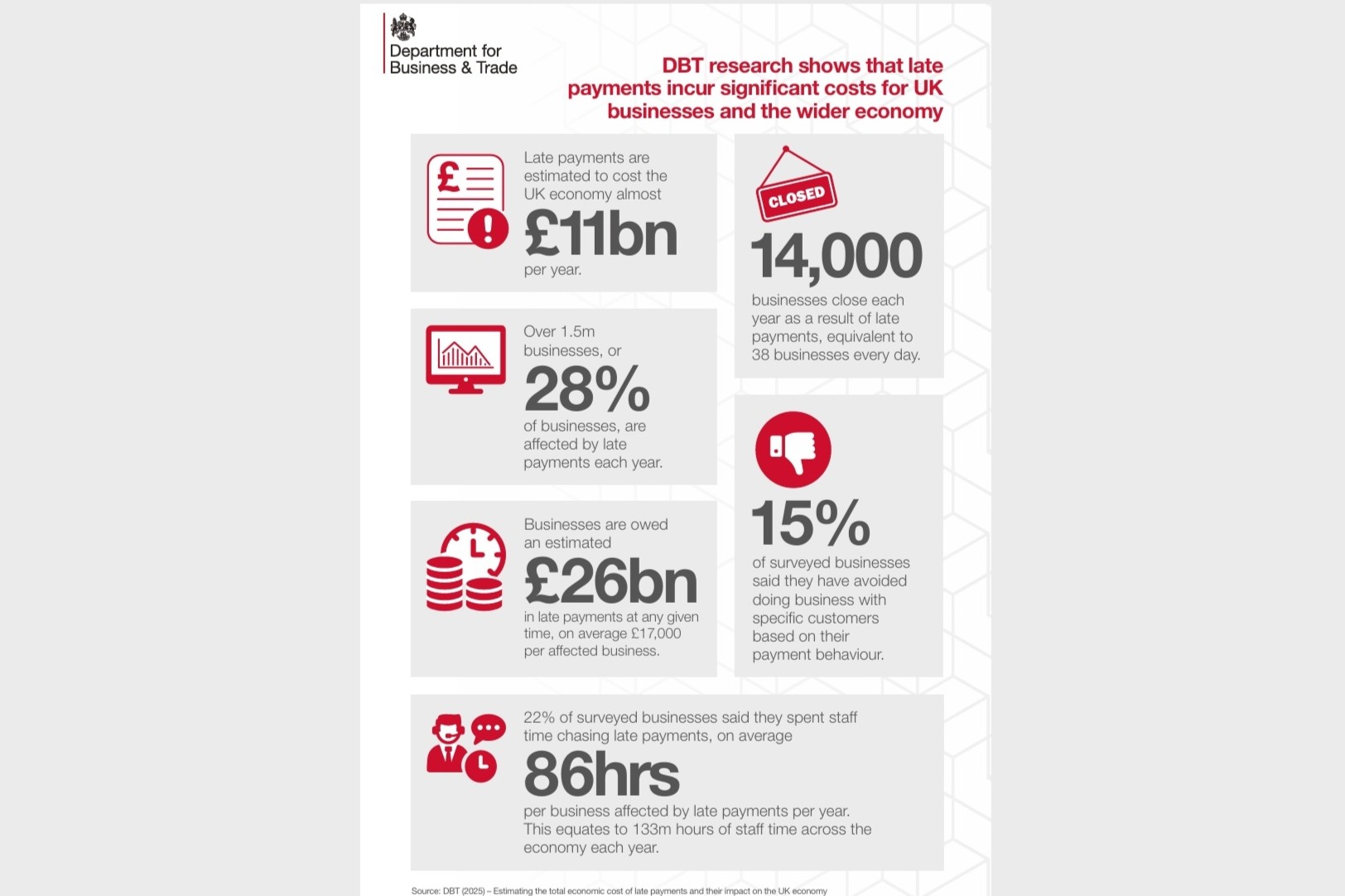
In a move that should have positive benefits for the merchant sector, the Federation of Master Builders and the National Federation of Builders have both expressed their support for the Government’s “late‑payment crackdown”.
The Government has recently released its late payment consultation response, confirming a “suite of measures to tackle late and poor payment practices, including automatic financial penalties, greater investigatory powers and a ban on retentions in construction contracts.”
Noting that the proposals offer “long‑overdue protection for small builders and a fairer supply‑chain culture,” the Federation of Master Builders states that the measures will ensure that small builders “finally have a real chance of seeing fairer, faster and more reliable payment terms across the supply chain,” describing it as a “long‑overdue step towards tackling the poor practices that have held construction SMEs back for years.”
CEO Brian Berry commented: “Small, local builders have been battling a culture of slow and unfair payment for years, and it hits them harder than anyone else in the supply chain. Too many SMEs are kept waiting by major contractors who treat long payment terms as standard business practice.
“If these reforms finally force the worst offenders to change their behaviour, it will give our members more certainty to plan workloads, invest in kit, and operate on a level playing field.”
Brian continued: “The proposed ban on withholding retention payments in construction is especially significant for our members. Retentions have been a major issue for small businesses for far too long, as too many SMEs are left carrying the risk when money they’ve already earned is held back for months on end.
“What our members want is simple: fair, reliable payment for work done, and a supply chain that treats small builders with the respect they deserve.”
James Butcher, Deputy Chief Executive of the National Federation of Builders, said: “Poor payment practice closes businesses, hinders growth and has been a persistent challenge for the construction industry. After years of tweaks without teeth and promises without action, this government has acted swiftly to announce measures that industry has spent decades calling for.”
Reforms will require Primary and Secondary legislation, and the construction industry will see further engagement to consider how the reforms will operate with their contract models.
In the meantime, the Government has outlined the following headline measures:
60-day cap on payment terms on all large firms when paying smaller suppliers.
New mandatory interest on late payments.
All commercial contracts to include statutory interest set at 8% above the Bank of England base rate.
New powers for the Small Business Commissioner, including adjudication of payment disputes.
Persistent poor payment offenders may face multi-million-pound fines.
A ban on retentions, post implementation consultation.
Rico Wojtulewicz, Director of Policy and Market Insight at the NFB, added: “The Government must be congratulated for staying the course to tackle poor and late payers. Too many before them have shirked the responsibility.
“For construction, the main challenge will be the ban on retentions. Retentions are used to ensure performance, compliance and completion but we understand why the Government’s hand has been forced by unscrupulous businesses abusing them to pay less and/or balance shaky accounting.”
Rico continued: “We therefore thank the Government for hearing our recommendation to further consult on the ban’s implementation. This period creates breathing room for adjustment and offers time to progress alternatives, such as accessible surety bonds or insurance.”
On the broader industry challenges relating to retentions, Rico said: “We will also be reminding the Government that they must continue to pursue the planning and procurement reforms intended to enable work pipelines for SMEs and regional construction companies. The use of retentions grew because regulatory costs made it difficult for constructors to plan work pipelines and afford direct employment, consequently increasing a reliance on sub-contractors where performance was managed through the retention process.
“Should the Government’s planning and procurement reforms succeed, thousands of businesses may again become financially resilient enough to directly employ.”