
PBM reports back from the recent NMBS Conference in Alicante.
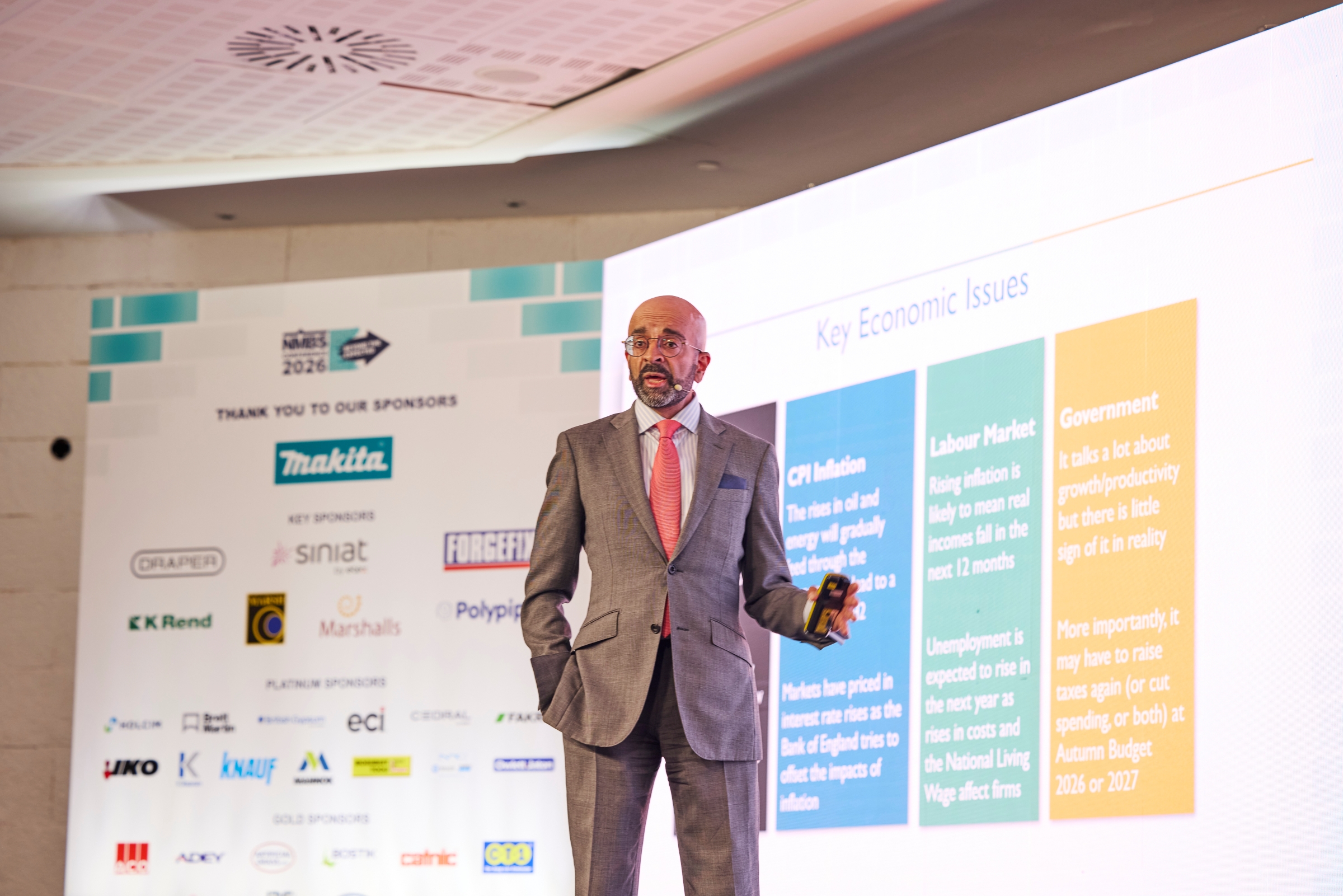
The gloomy, grey sky that greeted PBM’s arrival in Spain could hardly have been a more apt metaphor for the industry’s travails back home. As the Construction Products Association’s Economics Director, Noble Francis, stated plainly during an early session on Day One, the UK economy is merely “muddling through” in the face of sustained global instability and a government that has added “more tax, more costs and more bureaucracy.”
With inflation, falling real incomes, fragile homebuyer confidence and rising unemployment all still weighing heavily, Dr Francis warned that further contraction in housebuilding and private RM&I was likely this year. Any improvement, he suggested, would be deferred until 2027 — though modest and concentrated in certain fields.
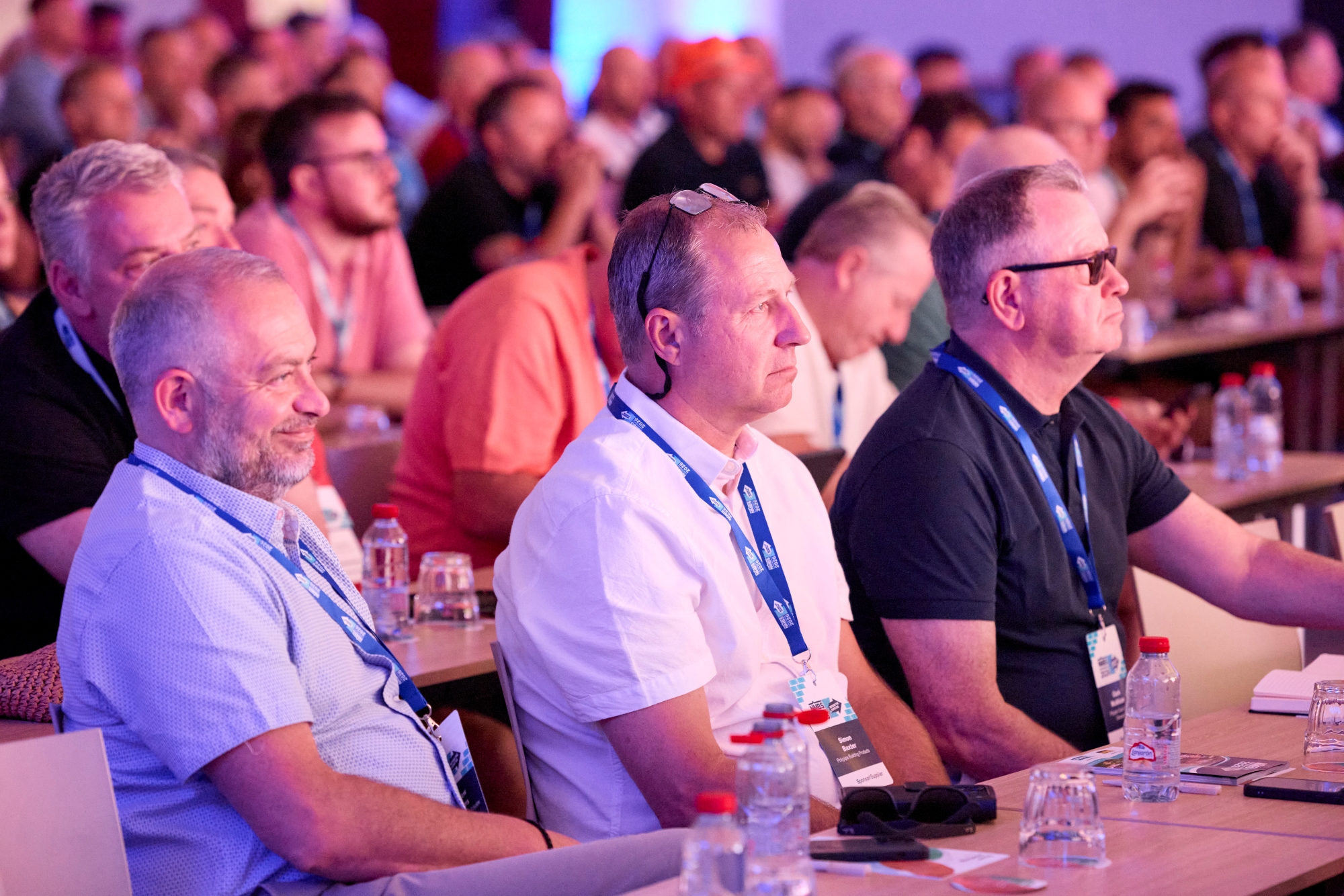
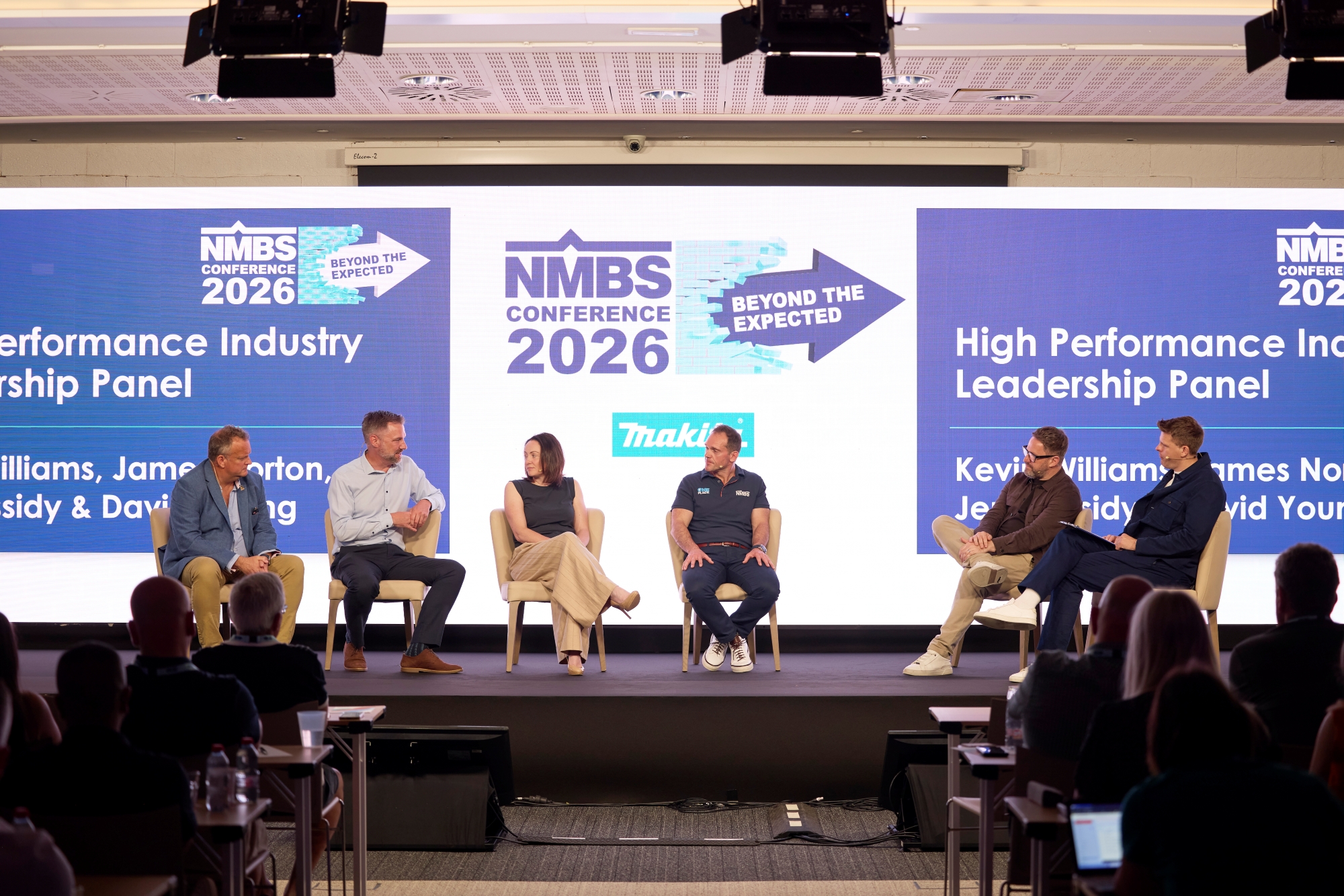
Harsh truths, but hardly revelations to delegates gathered in the cavernous conference room of the Melia Villaitana. Indeed, conversations at the Welcome Dinner had already confirmed the prevailing mood and were only further reinforced by an industry panel featuring NMBS CEO Kevin Williams, alongside Frank Key Group’s James Norton, Bradfords’ David Young and Bristan’s Jen Cassidy — a weary acceptance of the macro‑economic malaise and the knowing absence of any quick fix.
Yet sentiment at the conference was far from despondent. This is an industry that may be down but is not defeated. In fact, it is already developing the solutions.
So, under the theme Beyond the Expected, the clear and consistent message was in determining ‘how can we perform better?’ And, aptly led by High Performance podcast host Jake Humphrey in tandem with his colleague Professor Damian Hughes, the sessions focused on driving improvement by recognising and embracing change; of accelerating the adoption of new technologies, challenging existing cultures while retuning the inherent strengths that built the organisations represented in the room.
“Sentiment at the conference was far from despondent. This is an industry that may be down but is not defeated. In fact, it is already developing the solutions.”
Key among this was the notion of empowering your people, recognising that those closest to the customer can often see the potential shockwaves soonest. It was a point driven home by keynote speaker Dr Alison Edgar MBE, whose energetic Day Two session referenced her experiences at Yellow Pages to offer a cautionary tale about senior leadership doubling down on outdated models, not listening to the concerns of frontline staff as Google loomed ever larger.
Noting how, despite the wider market’s troubles, the merchant sector’s ‘competition’ of Wickes and Screwfix are growing by pivoting toward a more digitally-savyy trade customer while also addressing universal concerns, she gave the example of 30-year-old Xavier and the soon-to-retire Tony…
Xav was less concerned by trade counter relationships and more transactional in nature, prepared to switch his custom “if a new website started up and it did what I needed.” Both, however, cited the same biggest challenge — material availability and reliable deliveries: “if I discover I need something, leaving site to get it takes at least an hour out of my day…”
Generational shifts were also central to Ken Hughes’ session. Outlining that almost half the population are now millennial or younger, he warned that “disruption is real” and the “race for relevance” is already underway. Today’s “blue dot consumer” wants service centred upon themselves, expecting ease, speed and personalisation.
For the on demand, Netflix generation “seamless and frictionless experiences are no longer differentiators; they are merely hygiene factors.” And in a world that is already “half physical, half digital,” expectations are rising exponentially — and their older peers share this attitude too.
Yet customers also face the paradox of choice — and too many options can paralyse decision‑making. Here, Ken argued, agentic AI can become a game‑changer by actively helping customers decide while also making the experience feel personal to them.
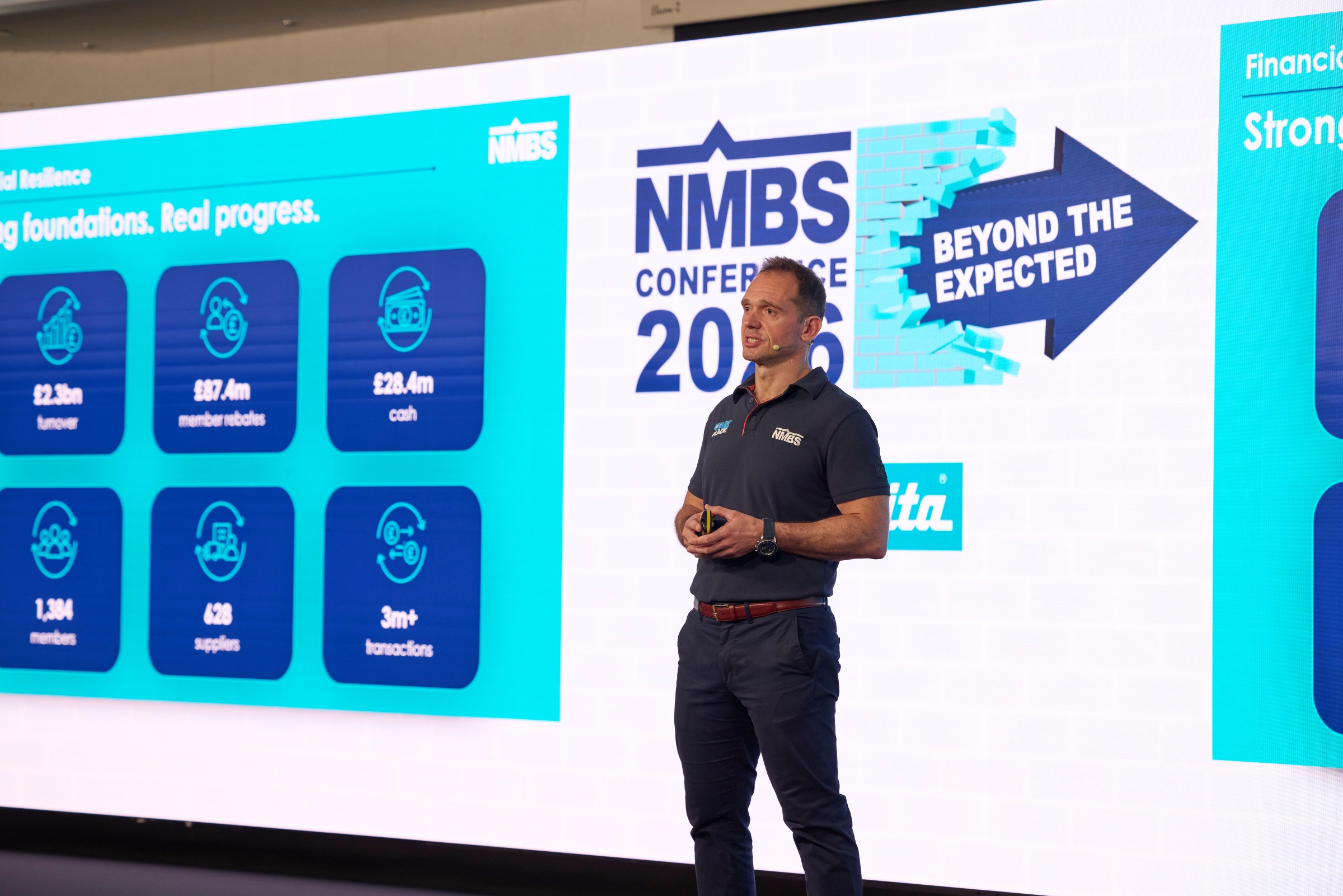
And this message of data-driven evolution was accentuated by Kevin Williams as he took to the stage for his first conference as NMBS CEO. He said: “NMBS has always helped merchants buy better — but now we must help the entire sector trade better.” While “not looking to replace what made NMBS strong,” Kevin described enhanced data as “the next layer of value.”
Whether that is “orders, invoices, payments and insight… digital connectivity will make trading easier, faster and more automated.”
Commercial Director Andy Hextall expanded on the vision, outlining the progress already being made across back‑office modernisation, a refreshed NMBS OnePlace and, not least, investment in the cross-industry Data Yard initiative.
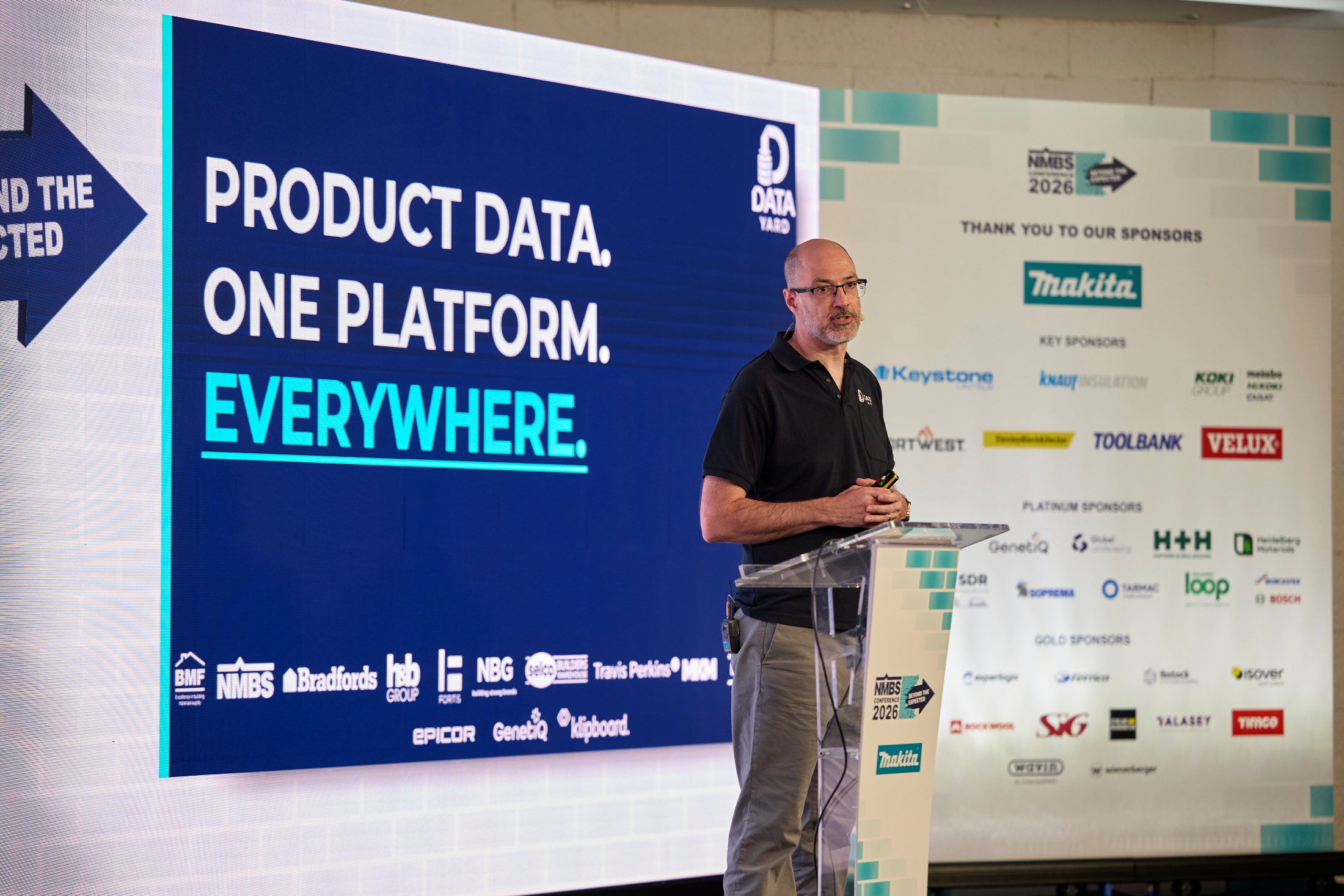
A full session on Data Yard, led by MD Gareth Thomas (supported by GenetiQ’s Gary Brookshaw to conduct a live demo of its capabilities), further underlined its importance. Ensuring reliable, accurate and up-to-date product data, Gareth argued, remains one of the industry’s biggest challenges — and one of its biggest opportunities.
“Put simply, poor data means lost sales. There is a better way — publish it once, and distribute it everywhere,” he said, adding that AI “loves structured product data” meaning that it will soon become the core way in which customers source information.
And with the notion of Artificial Intelligence underpinning so much of the overall discussion, the most in-depth session on the topic was delivered by Jonathan Bein who offered a forward‑looking view on what AI could mean for the building materials supply chain by 2030.
As many are already finding, “early AI adoption will deliver real competitive advantage” and while the technology moves at pace, productivity gains, added efficiencies and significant cost savings will all be achievable — while also maximising the potential for cross- and upselling by drawing on data from your PIM alongside predictive purchasing / reordering decisions and even accounts receivable.
Once more reinforcing the point, the need for solid data is a pre-requisite to truly capitalising.
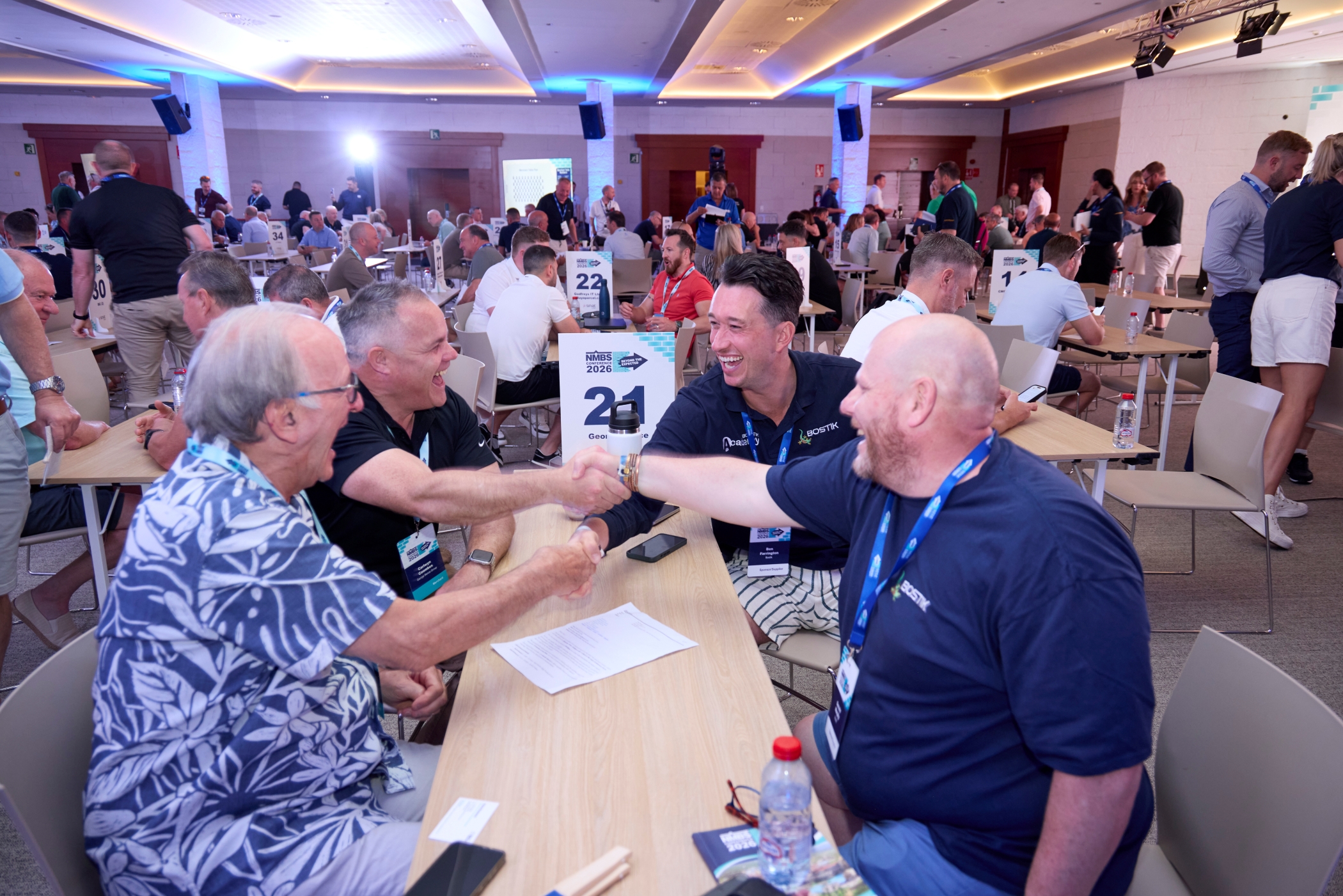
With other sessions exploring the CIC’s work to boost diversity and inclusion, last‑mile delivery innovations such as Tradeaze, cybersecurity readiness, the launch of the 2027 Pavestone Rally and the reveal of Marrakech as the destination for next year’s BMF Conference — not to mention the vital ‘Meet the Merchant’ sessions for fostering much-needed collaboration and relationship building — the packed programme offered a welcome pause from home front worries.
Overall though, the business takeaways were clear: growth may be out of reach in the short term, but efficiency, innovation and improvement are not. Despite the wider challenges, the conference was anything but downbeat. Instead, it was a showcase for higher performance standards and a desire to truly deliver service ‘Beyond the Expected.’
Those grey clouds on arrival? They cleared quickly. A hopeful omen for blue skies ahead for the industry…
Click here to visit the NMBS website.