
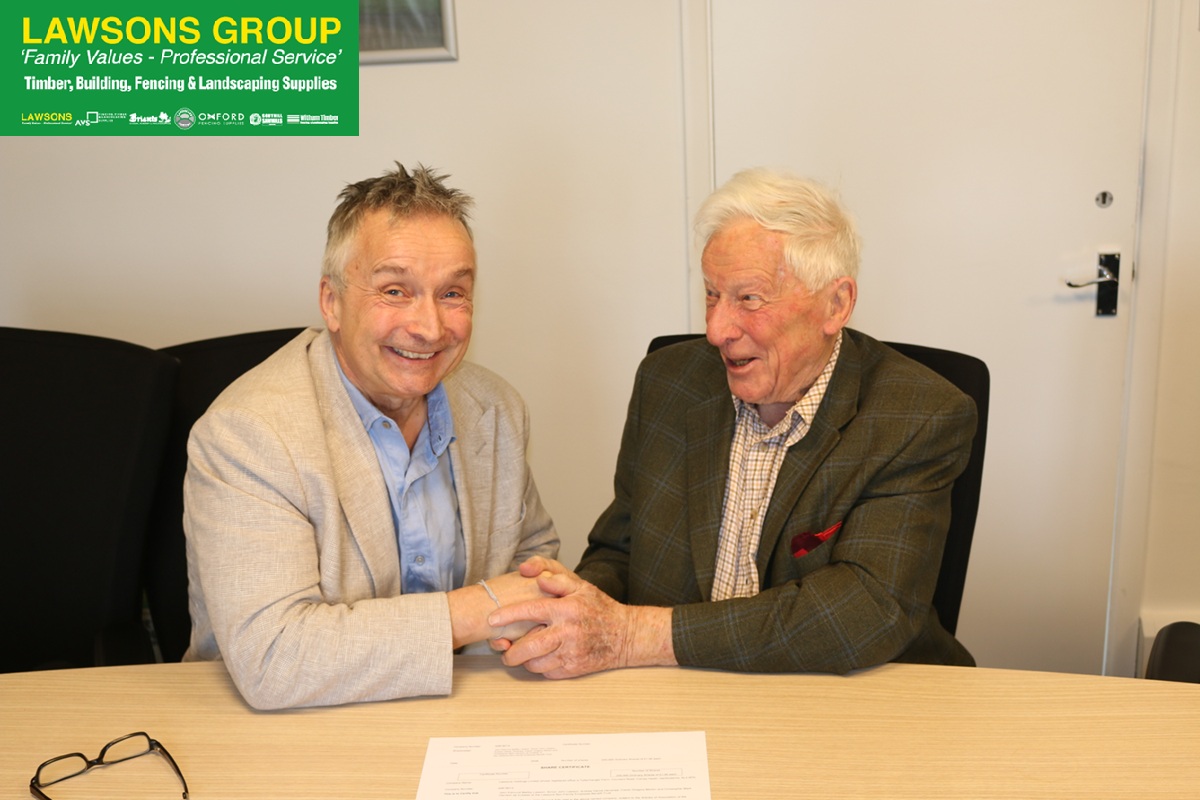
Family shareholders of Lawsons Group have transferred 51% of the company into an independent ethical trust, as a gift for no financial return, to ensure it can never be sold by “locking in the family’s values.”
The gift has been made by Chairman John Lawson, 93, who has led the business for 70 years and who previously held a 50% shareholding. This move is described as “permanent and irreversible.” And by returning his ownership to an independent ethical trust, John has given up completely any personal financial gain to ensure Lawson’s founding values can never be diluted, sold, or overridden.
Today, the business generates approximately £180 million in annual turnover, operates 35 branches, and runs a fleet of around 150 vehicles. It has net assets in excess of £87m.
Founded by a Quaker family in 1921, Lawsons has long operated on the principle that “commercial success and ethical responsibility are not in conflict.” That philosophy is now embedded in the business’s legal structure.
“I’ve never wanted to sell the business or pursue short‑term gain. What matters is that Lawsons stays true to its principles and values for the next 100 years.”
John Lawson
Under the new arrangement, the new trust will “protect Lawsons’ independence, culture, staff benefits and community commitments” while day-to-day operations remain unchanged under the existing management team.
The trust is legally bound to preserve the benefit of the shareholding for current and past employees and their families which means:
Independence — Lawsons cannot be sold to private equity, publicly listed, or absorbed by an acquirer that does not share its values
People-first culture — Decisions must continue to reflect the prioritisation of staff welfare
Long-term commitments — to suppliers and trade customers, providing long-term commercial stability across its network
Community responsibilities, alongside multiple local initiatives, international action such as rebuilding efforts in Jamaica following Hurricane Melissa
John Lawson, Owner and Chairman, said: “For more than a century, Lawsons has been built on doing things properly, treating people fairly and supporting our communities. My question has always been what happens to those values when I’m no longer running the company?
“This structure answers that, it protects them in law, permanently. I’ve never wanted to sell the business or pursue short‑term gain. What matters is that Lawsons stays true to its principles and values for the next 100 years.”
The gift comes at a time when the builders’ merchant sector is undergoing increased consolidation, with independent businesses being acquired by larger listed groups and private equity-backed operators. In contrast, the Lawson family has “chosen to forgo any financial return in order to secure the company’s long-term independence and values.”
The trust will be overseen by five trustees: John Lawson, Simon Lawson, Andrew Henshaw, Ciaran Morton and Chris Harrison. Their role is to ensure the principles set out in the trust are upheld over time.
Ciaran Morton, Trustee and Group Marketing Director at the firm, said: “The trust provides a clear ownership framework that protects how the business operates, from how we treat our people to how we work with customers and suppliers.
“Nothing changes day to day, but it ensures long-term stability and protects those principles for the future.”
Established in 1921, the Lawsons Group is reportedly now the largest independent Timber, Building Materials & Fencing merchant in London and the South East, with branches located from Lincolnshire to the South Coast. The Group includes 19 Lawsons branches, 12 branches of AVS Fencing & Landscaping Supplies, in addition to Briants of Risborough, The Landscape Centre, Oxford Fencing Supplies and Witham Timber.
Furthermore, the business owns much of the land, timber yards, offices and depots it operates from — described as a “long-term asset strategy consistent with a company that has never been managed for short-term return.”