

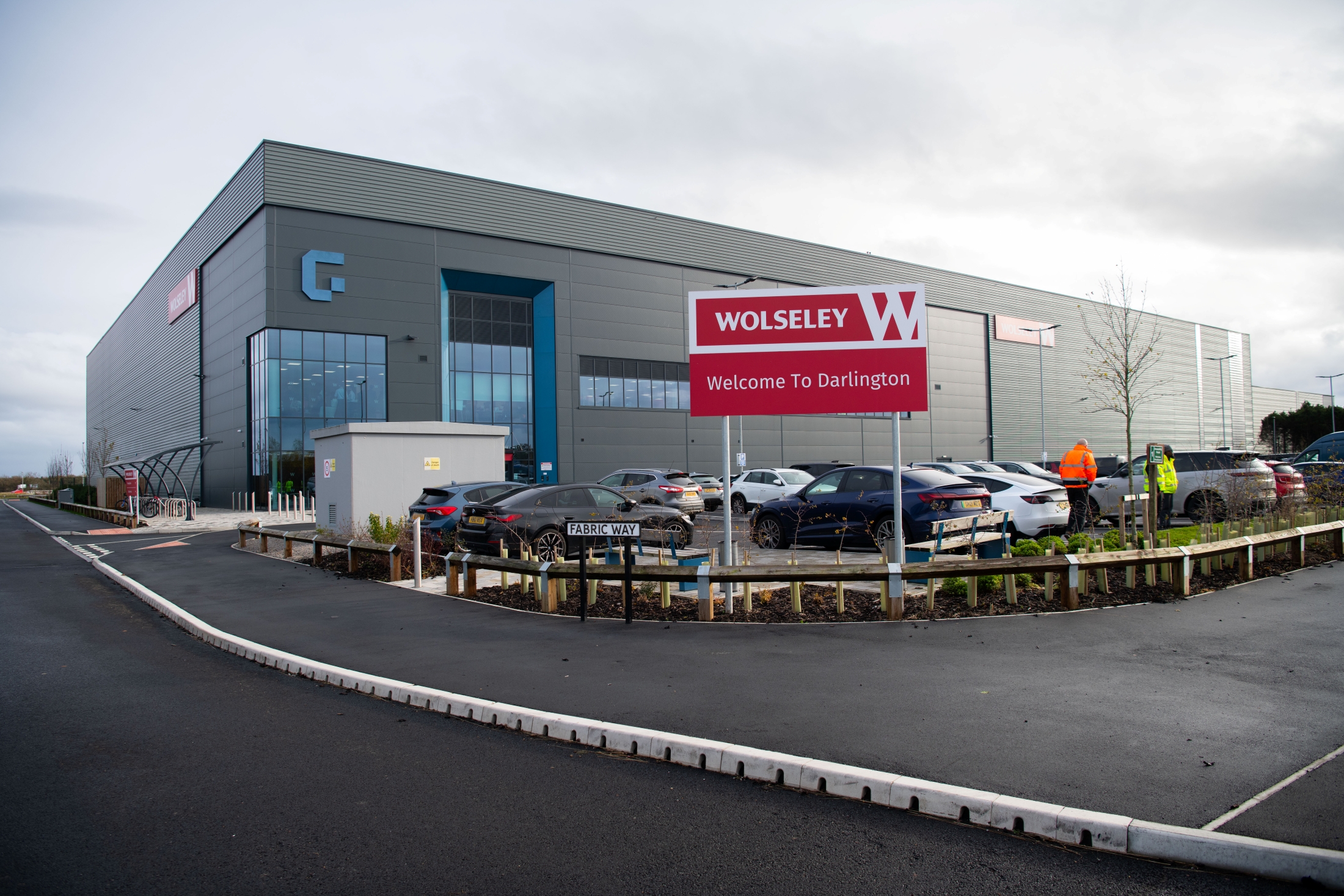
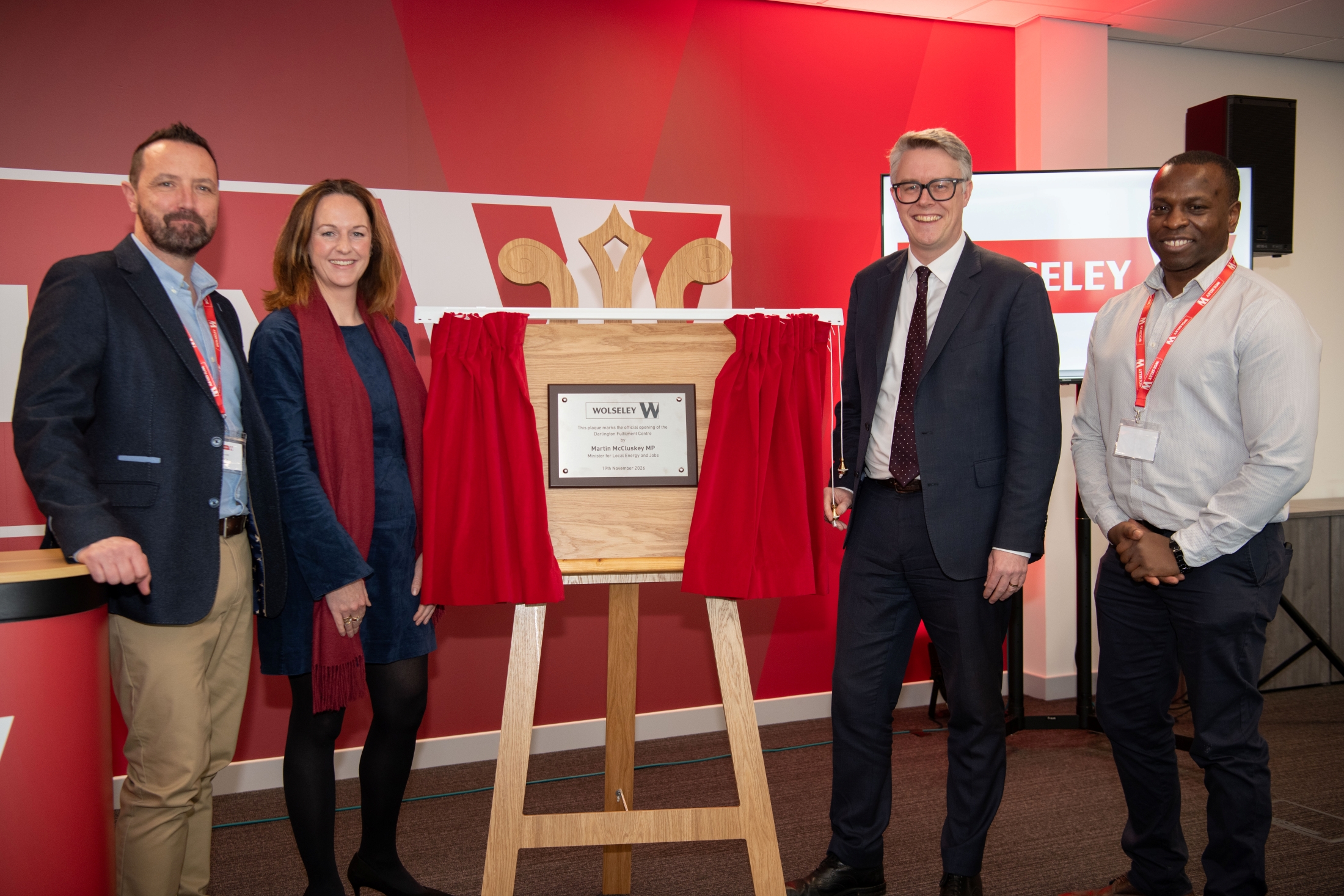
Martin McCluskey MP, Minister for Local Energy and Jobs, has officially opened Wolseley’s new fulfilment centre in Darlington.
The opening coincided with the launch of Wolseley’s new supply chain report, Facilitating Net Zero: The Critical Role of Supply Chain Transformation, which warns that “the UK’s supply chain must transform rapidly” to keep pace with heat pump demand, projected to grow around fivefold between 2026 and 2030.
The 100,000 sq ft facility will support large-scale renewables projects across the UK, helping deliver the Government’s ambition of 450,000 heat pump installations a year by 2030. As per the findings of the merchant group’s report, this increased demand will have several impacts on the supply chain, including a “projected rise in lorry trips to and from warehouses of 71% within three years.”
Logistics networks “will also need double the space within three years, meaning traditional branch distribution and collection models will need to adapt to deliver heat pumps at the scale required.”
The Darlington site has been designed to help address these challenges by forming a key part of Wolseley’s new fulfilment model. Storing products centrally in dedicated fulfilment centres and delivering direct to site will allow the business to supply heat pumps “at scale to installers, housebuilders and large contractors.”
The Darlington site is the latest in a series of Wolseley investments in renewables. It follows the launch of Renewables Centre last year, which helps installers move into low-carbon heating through training, certification and project support.
During the visit, the Minister toured the site alongside customers, suppliers and industry partners. He commented: “The hugely impressive Wolseley facility is supporting high-quality, skilled jobs in the industries of the future. A heat pump cuts an average family’s carbon emissions by 70% and can save them money on their energy bills, with grants of up to £9,000 available to make the move away from volatile fossil fuels.”
Glen Scorah, UK Sales and Operations Director for Contract at Wolseley, added: “Heat pumps are changing how our industry works. They’re bigger, heavier and more complex to deliver than gas boilers, and our customers need them on site, on time and at scale.
“That’s what Darlington is built to do. With demand projected to grow fivefold in the next few years, we’re investing now so housebuilders, contractors and installers have the supply chain they need to deliver the heat pump rollout.”
The report finds that supply chains need at least three to five years to prepare for growth on this scale. Accordingly, Wolseley is calling on the Government to:
maintain clear, credible and consistent policy signals and installation targets beyond 2030
clarify whether future policy will include a formal phase-out date for fossil fuel heating in homes
work with industry so supply chains are ready to deliver policy-driven clean heat at the scale needed
support the decarbonisation of freight and logistics fleets, including a cut in fuel duty on HVO
support skills and workforce development across the logistics sector

Facilitating Net Zero: The Critical Role of Supply Chain Transformation was produced for Wolseley by Talan. It models how policy-driven growth in low-carbon heating will affect warehousing, logistics, stock and workforce across the UK heating supply chain between 2026 and 2040. All figures are projections.
Key findings:
Heat pump installs projected to grow around fivefold between 2026 and 2030
The supply chain will need to handle 70% more pallets by 2030
Lorry trips to and from warehouses projected to rise 71% within three years
The value of stock the industry needs to hold projected to rise from £339m in 2026 to £889m by 2040
With investment in new delivery models, delivery trips to site projected to be 55% lower by 2040
Supply chains need at least three to five years to prepare