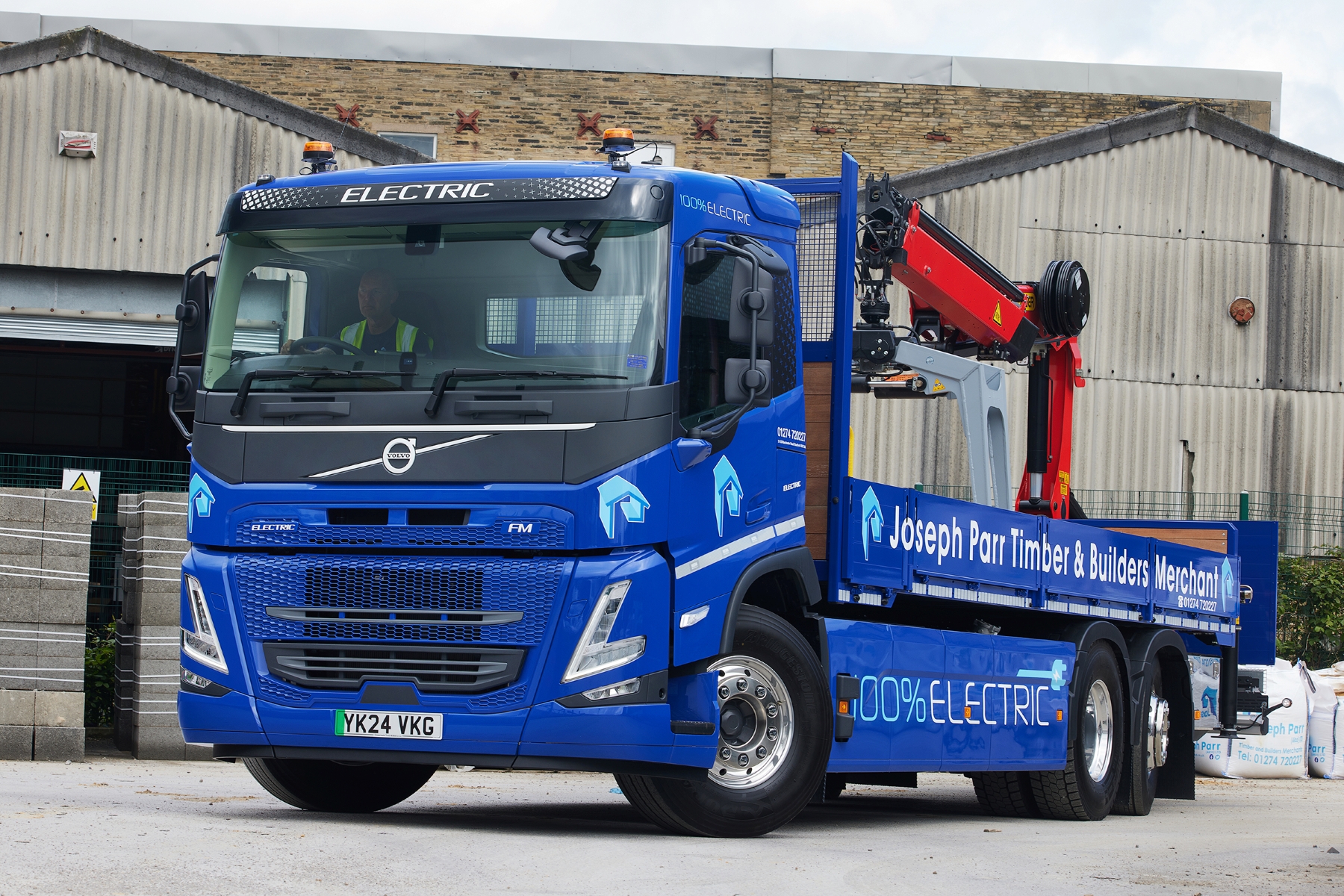

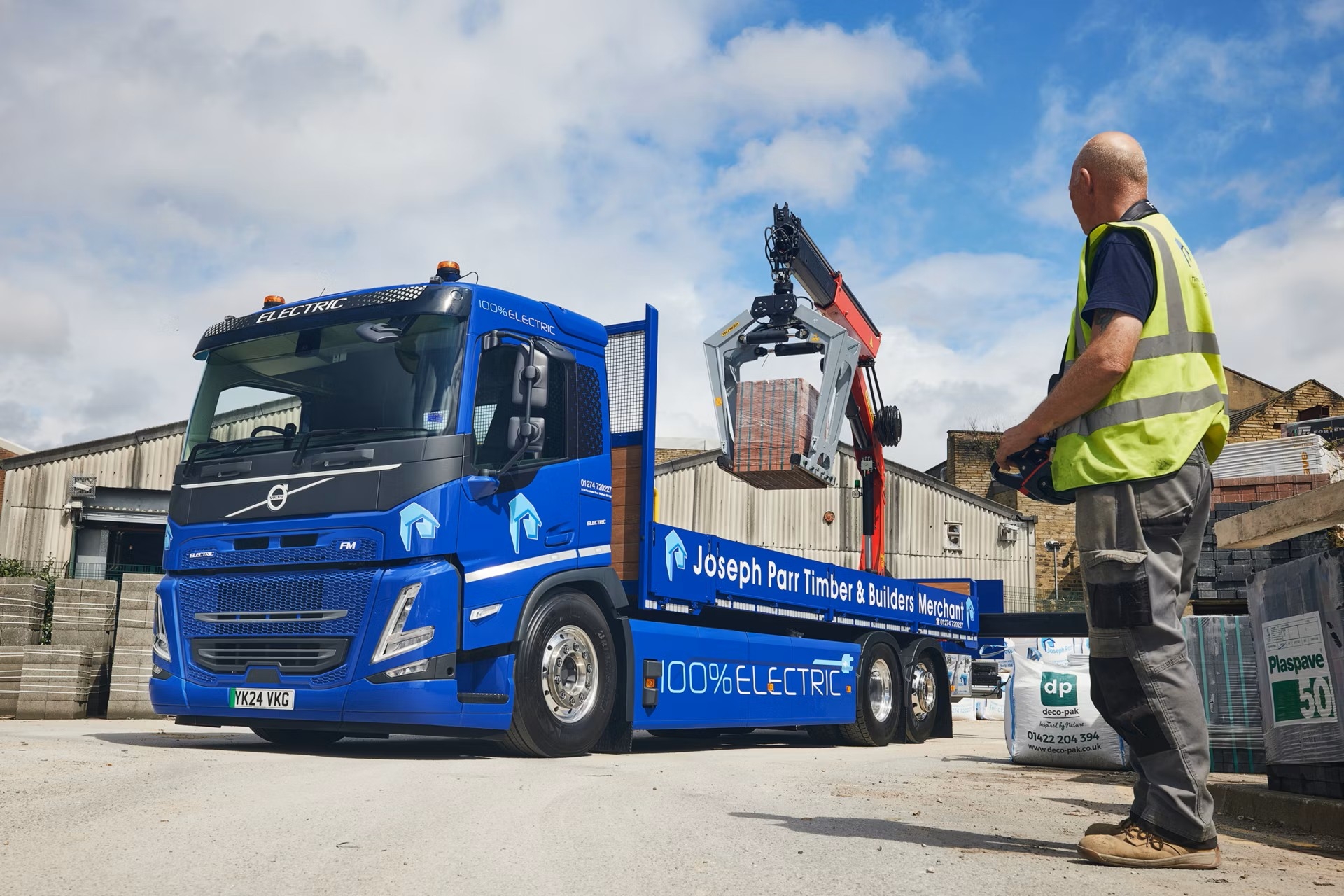
A recent BMF‑arranged visit by a constituency MP to Joseph Parr in Bradford put the spotlight on the firm’s Volvo FM Electric 6×2 rigid, believed to be the first zero‑tailpipe heavy‑duty truck in builders’ merchant operation in the UK.
PBM looks at how the vehicle came into service and how it is performing on the job.
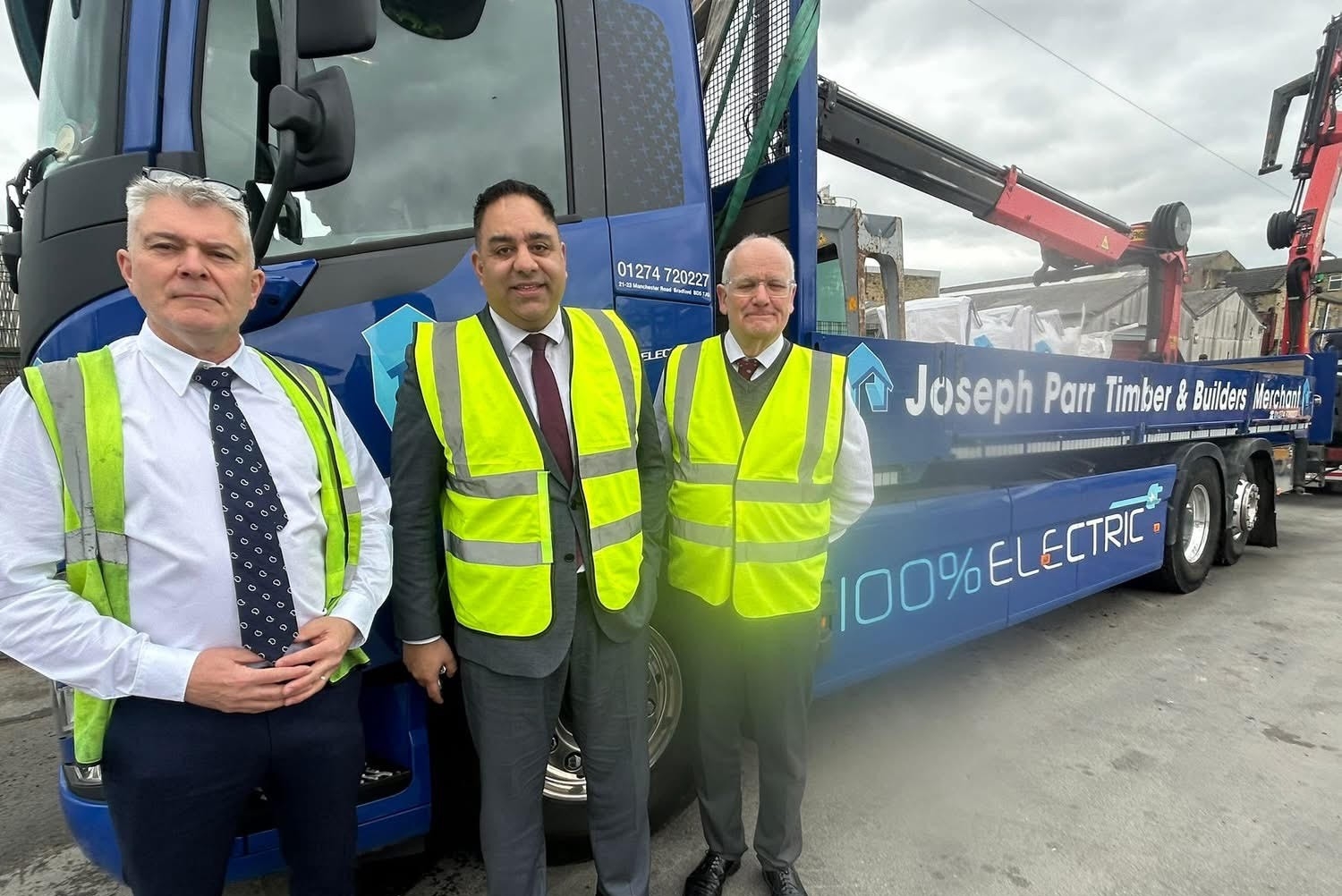
Back in April, as part of the BMF’s ongoing ‘Industry and Parliament’ programme, MP for Bradford East Imran Hussain paid a visit to the Joseph Parr Group branch in Broomfields to gain a greater understanding of the headwinds and cost pressures facing merchants in a challenging construction market.
With the call closely following on from the company celebrating its 10th anniversary in the city since opening on the site of a former car dealership along Manchester Road, Mr Hussain also heard how the business was looking to manage costs, stay ahead of legislative change and improve the efficiency of its deliveries through its Volvo FM Electric.
“Transitioning to electric trucks helps meet carbon reduction targets and aligns with broader industry regulations and clean air initiatives.”
The vehicle replaced a diesel model from a rival manufacturer in the firm’s five-strong HGV fleet and was first deployed in mid-2024. Commenting during the MP’s visit, MD Michael Beaumont said: “I am glad Imran was able to see our Volvo FM Electric 6×2 rigid, which was part-funded by a grant from Bradford City Council. Despite the additional weight of the batteries, we actually see a slight payload advantage over the traditional 26-tonne diesel trucks we also run. That was an important factor as we are pretty much up to full weight every time our trucks go out.
“Regulations affecting commercial transport are changing and we want to ensure Joseph Parr is ahead of the curve when it comes to cleaner, greener HGVs. The well-documented energy price shock in the Middle East may hasten the adoption of electric lorries. We are proud to be the first.”
Furthermore, with a wider focus on decarbonisation, customers are demanding greener supply chains — and builders’ merchants are under increasing pressure to demonstrate environmental responsibility with tangible actions. Accordingly, and helping to decarbonise its overall operations, Joseph Parr opted to look at alternative fuel choices for its delivery fleet.
With one of the marque’s (traditional) vehicles on its fleet already, the business approached Volvo Trucks which it deemed to be “clearly leading the way when it comes to electric.” And as noted above, the truck was part-funded by a grant from Bradford City Council, which is monitoring the impact closely — via data from Volvo Connect, the manufacturer’s fleet management system — as it tries to drive down carbon emissions in the city’s Clean Air Zone and wider areas.
Supplied by Crossroads Truck and Bus, the vehicle has a four-battery configuration, ensuring the “perfect combination of range and payload capacity” for building materials deliveries. Built on a 5,200mm wheelbase, the rear-steer tag axle FM Electric — fitted with a Palfinger BM 26 crane — is powered by two electrical motors which generate 450hp and will operate at a 28-tonnes gross vehicle weight.
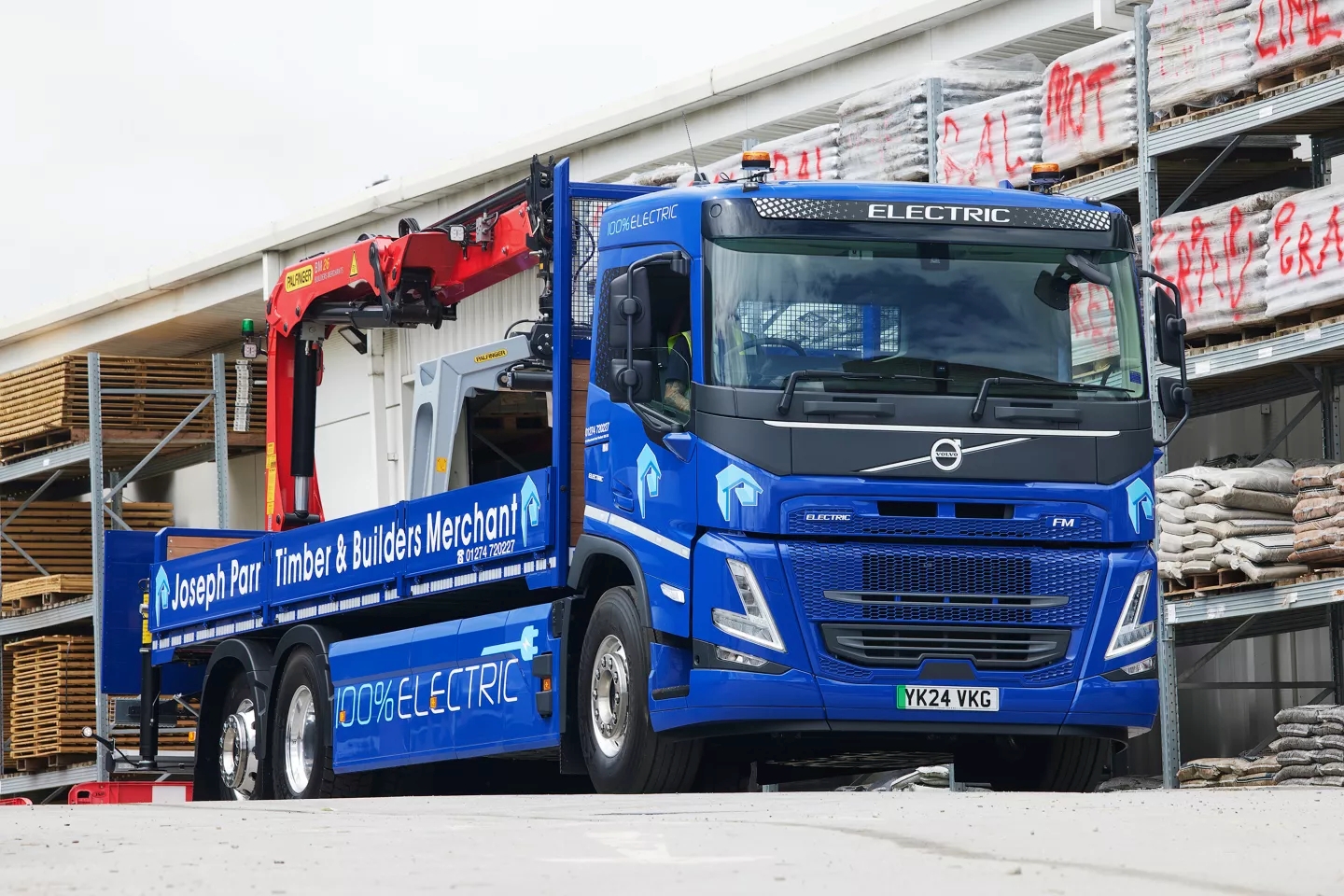
The specification included a day cab, while the exterior was enhanced with a “striking Naval Blue livery,” Alcoa Dura-Bright alloy wheels, chassis side skirts and two roof amber beacons. In addition, the FM Electric was backed by a comprehensive five-year Volvo Gold Contract — which sees all maintenance undertaken at the local dealership in Birstall — while for added customer peace of mind, the agreement also guarantees the performance of the traction batteries beyond the two-year warranty that came with the truck as standard.
“Regulations affecting commercial transport are changing and we want to ensure Joseph Parr is ahead of the curve when it comes to cleaner, greener HGVs. The well-documented energy price shock in the Middle East may hasten the adoption of electric lorries.”
As well as working in Bradford, the business will also use the vehicle for operations in Leeds, Wakefield, Huddersfield, Halifax and Manchester. Accordingly, a 43kW AC charger was installed at the company’s depot, allowing the truck to charge overnight before heading out to complete its deliveries the next day.
Indeed, with builders’ merchant vehicles typically operating on a back-to-base cycle within a relatively limited radius — and invariably during the day and parked up at night — most of the charging can take place at the branch, at slower speeds and when the price of energy is lowest. This means the potential cost saving over diesel is at its highest, which all contribute to the reasons why Volvo argues merchant fleets are “perfectly suited to switching to electric right now.”
The manufacturer adds that electric trucks also “thrive in stop/start urban environments, thanks to regenerative braking and low noise levels” which provide a “win for both efficiency and community relations… being able to roll up to a residential building site at 7am and unload without waking the neighbours.”
It further states that diesel trucks in this type of application can also be prone to the Diesel Particulate Filter (DPF) needing to be serviced more regularly than normal — given the truck spends so much of its day in slow speed, stop/start traffic, or with the engine running whilst stationery to power the crane. However, with a battery electric truck, there is no DPF to worry about, helping to boost uptime as when the crane is operating, it derives its power straight from the truck’s traction batteries.
Click here for more information on Volvo electric trucks.