


Ian Brookes, Head of Merchant Sales at Viessmann Climate Solutions, explores the role of heat pumps as part of a “connected energy ecosystem,” outlining what merchants need to know and how this presents a strong opportunity to grow sales.
For years, heat pumps have been sold as standalone heating appliances — indeed, as boiler replacements. Increasingly, however, they’re becoming the centrepiece of a much wider home energy system, integrating with solar PV, battery storage, electric vehicle (EV) chargers and mechanical ventilation with heat recovery (MVHR).
That shift has important implications for distributors and merchants. It means product compatibility, technical support and after-sales service are becoming just as important as the price and performance of the heat pump itself.
Energy management
An EMS (Energy Management System) is a set of hardware and software tools used to monitor, control, and optimise how a building, factory, or power grid uses energy. It collects real-time data from sensors and meters to track electricity, gas, or water usage and automatically adjusts equipment to lower costs and reduce carbon emissions.
Connected heat pumps offer a major advantage in this context. By shifting operation towards periods when electricity is cheaper or when solar generation is available, they can reduce running costs without compromising comfort. But to do this, the heat pump must be capable of communicating with other technologies throughout the home, to ensure occupant comfort is not compromised.
At the same time, customers need systems that can grow and be upgraded over time as budgets allow. A homeowner may begin with a heat pump or solar before later adding battery storage or EV charging. If all those products cannot communicate effectively, much of the potential benefit of dynamic load shifting is lost.
Product selection is therefore increasingly about futureproofing, not just meeting today’s heating requirements.
“As heat pumps become part of connected home energy management systems, merchants have scope to increasingly position themselves as trusted advisers, helping installers select systems that will remain flexible as homeowners expand their renewable technologies over time.”
Why openness matters
All this means interoperability is becoming a key consideration during specification. For merchants, this represents an important evolution in conversations with installers.
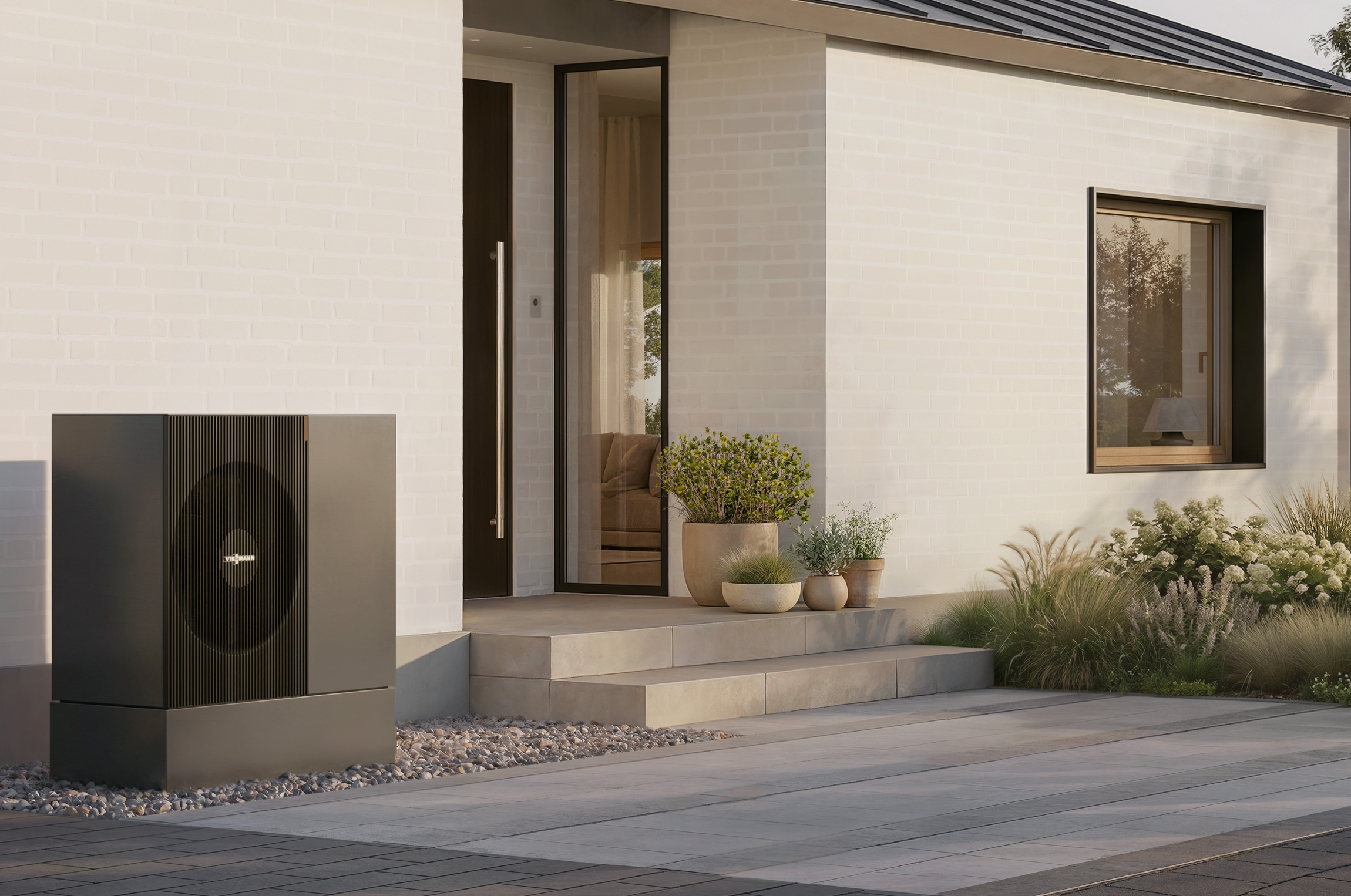
Meanwhile, manufacturers are responding by developing products that can form the foundation of a wider energy ecosystem. This is the thinking behind Viessmann’s new Vitocal 200-A ie (intelligent energy) monobloc air source heat pump (see images).
Built around the company’s One Base Intelligence platform, it can integrate not only with Viessmann products but also with a large number of compatible third-party PV, battery storage, EV charging and ventilation systems. This means customers are not locked into a single technology pathway.
Any future additions to their set-up can be incorporated into a single control platform, operated via an app on their phone. Plus, using open logic controllers in this way removes the need for merchants to stock expensive, proprietary external gateways.
The launch of the Vitocal 200-A ie plants Viessmann firmly in the mainstream heat pump market, arguably for the first time. With competitive pricing for the growing entry- to mid-market sector and outputs from 4 kW to 12 kW, the range addresses approximately 70-80% of UK residential properties — without sacrificing the engineering quality associated with the Viessmann brand.
The growing importance of support
As systems become more interconnected, local, trusted technical support inevitably becomes more vital. Products from China or Japan that come with parts only warranties or limited UK engineering resources can create huge admin headaches for distributors when problems arise.
Merchants therefore increasingly need confidence that manufacturers can provide end-to-end technical assistance throughout the product lifecycle, including spare parts, software updates, engineering expertise and an in-house nationwide after-sales fleet of engineers. Manufacturers with established and comprehensive UK after-sales infrastructure are consequently likely to become increasingly attractive partners.
Designed for the UK
Alongside connectivity, ease of installation remains a critical consideration in the heat pump sector. The Vitocal 200-A ie was therefore developed using feedback from renowned UK heat pump installers. Practical details such as pipe locations, wiring arrangements and installation layouts were refined specifically for British housing.
Logistics have also been considered. Unlike many imported products, the outdoor unit fits on a standard Euro pallet, simplifying transportation and handling throughout the distribution chain.
Forthcoming proposed mandates is another factor tipping the balance away from East Asia and in favour of European manufacturers. The proposed Industrial Accelerator Act (IAA) is expected to limit government grant funding schemes, to ‘Made in EU’ products safeguarding local jobs and supply chains.
It introduces controversial low-carbon mandates for public procurement and green subsidies in strategic sectors like steel, automotive, and clean tech to lift manufacturing to 20% of EU GDP by 2035.
An opportunity for merchants
As heat pumps become part of connected home energy management systems, merchants have scope to increasingly position themselves as trusted advisers, helping installers select systems that will remain flexible as homeowners expand their renewable technologies over time. That means stocking products capable of integrating with wider energy ecosystems, working with manufacturers providing robust UK technical support and understanding how digital connectivity, interoperability and future legislation will shape customer demand.
The next generation of heat pumps is no longer simply about heating. It’s about creating a platform for the fully electrified home. Merchants that recognise this shift early will be well placed to support installers as renewable technologies become increasingly interconnected and homeowners seek solutions that deliver value not just today, but for many years to come.
Click here for more information from Viessmann Climate Solutions.
Images show: Viessmann’s new Vitocal 200-A ie heat pump has been designed for the changing UK market.