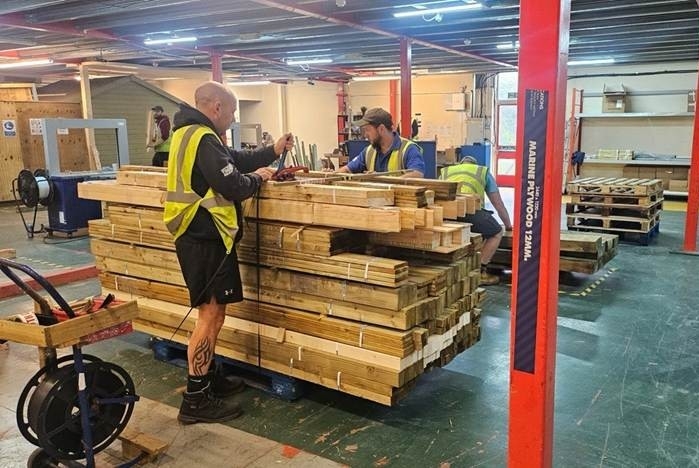

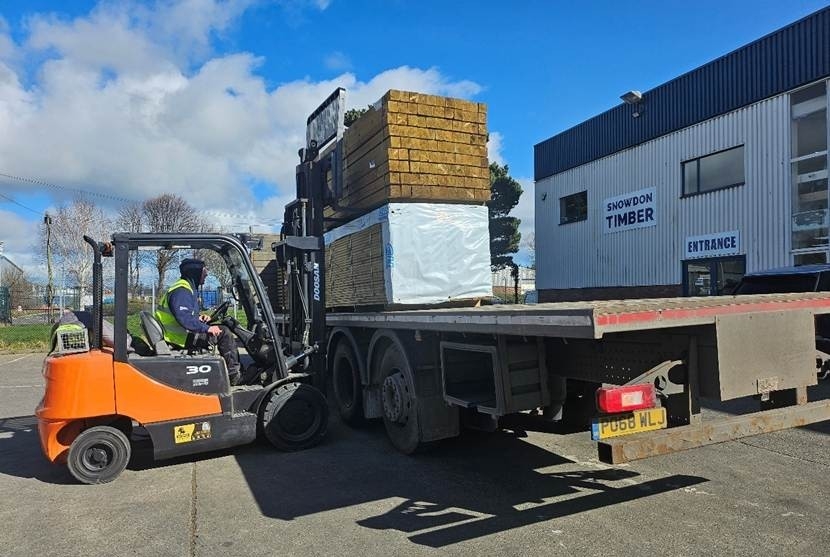
Family-run Snowdon Timber in North Wales caters mostly to the trades but reports it has found a new source of growth on Temu, selling to hobbyists working on personal projects.
Founded in 2019, the business started as a timber yard in rural North Wales selling to its local neighbours yet “quickly grew to meet rising demand,” conducting most of its business with professional buyers. However, Jody and Ksenia Goode, the husband-and-wife team behind the company, saw an opening to widen that customer base on Temu by listing value-grade timber – stock that carpenters may reject for knots and veins, but would work well for smaller individual projects.
They uploaded three products and generated more than £15,000 in sales within a month, driven entirely by organic traffic. Indeed, those listings are said to have moved faster than stock on some of Snowdon Timber’s longer-standing platforms. Jody is now preparing to upload the rest of the company’s 1,800-product catalogue and “expects Temu revenue to overtake some of its other e-commerce channels in 2026.”
Ksenia, who runs the company’s marketplace operations, commented: “Temu has allowed us to access a broader audience that we wouldn’t typically reach through traditional channels.”

Indeed, Snowdon Timber’s experience is said to reflect a broader shift in UK independent retail as sellers who built their businesses on one or two dominant platforms are increasingly looking for “channels that bring new customers, rather than redistribute the same base.” And so while around 70% of Snowdon’s revenue comes from a single platform with a heavily trade-and-DIY audience, Temu’s “more than 13 million UK users draw from a different pool.”
The company first listed its value-grade timber on Temu as a test, where it “became the best-selling category across all its channels.” Customers are said to have responded to the wood’s character and to the idea of giving usable timber a longer life, while the imperfections that rule it out of large construction jobs are “not a problem for hobbyists working with smaller pieces.”
Rwinforcing the potential, in a 2025 Ipsos survey of UK Temu users, 30% said the platform enabled them to take on a creative or DIY project. Moreover, the team are also able to use Temu’s seller analytics to shape its sales strategy, drawing on dashboard data available through the Seller Portal.
According to the Snowdon Timber website, the business is already adept at using tech-based platforms to open up new sales channels. For instance, it notes that had previously introduced “reject timber – a cost-effective and sustainable alternative that helps reduce waste – (and) online sales took off through eBay, and soon after, we began selling through major platforms including B&Q, Amazon, and our own website.”
These innovations, it notes, led to the opening of its Llandygai site near Bangor, now a hub serving customers across the UK, while its Mochdre outlet continues to support the local community.
Overall, the firm now employs 23 people, three times its headcount a year ago. Staffing is said to be a “persistent constraint” in rural North Wales, as young workers leave for cities and the area has few large employers to anchor them. However, the company is trying to change that. For example, it sponsors local sports clubs, runs apprenticeships across warehouse and digital roles, and runs an e-commerce knowledge transfer project with Bangor University, backed by the UK government’s Innovate UK programme.